


The human brain is deeply hardwired to recognize, process, and respond to a smile before almost any other facial expression. Long before we evaluate what a person is saying, we subconsciously register the warmth, openness, and health conveyed by their teeth and their facial harmony.
The emotional psychology of smiling is profound. When you feel confident in your teeth, you smile more freely, laugh without covering your mouth, and naturally project self-assurance. Conversely, if you are self-conscious about chipped enamel, discoloration, or a misaligned bite, you may instinctively suppress your facial expressions. Over time, this constant self-censorship can alter how you engage in social interactions, how you present yourself in professional meetings, and even how you experience joy in photographs.
Living in a dynamic, highly visual, and cosmopolitan environment means that personal presentation carries significant weight. Whether you are networking at a corporate event, socializing, or simply going about your daily life, your smile acts as your primary social currency. Because of this, seeking a high-quality smile makeover in Dubai has transitioned from being a niche luxury to a standard investment in one’s personal and professional well-being.
However, the term “smile makeover” is heavily utilized in marketing, often leading to confusion about what the process actually entails. It is not simply about requesting the brightest shade of white available. It is a highly sophisticated, medical, and artistic process designed to restore both the functional integrity and the aesthetic beauty of your mouth.
This comprehensive guide will demystify the entire process, exploring exactly what a smile makeover is, the specific clinical treatments it encompasses, and how to determine if you are a candidate for this life-changing transformation.
What Is a Smile Makeover?
To put it simply, a smile makeover is a completely bespoke, multidisciplinary dental treatment plan designed to dramatically improve the appearance and health of your smile.
There is no single “makeover” procedure. Because every face is uniquely asymmetrical and every dental arch has its own specific architecture, a true smile makeover requires a highly personalized combination of restorative and cosmetic treatments.
In the past, patients often requested a Hollywood smile in Dubai, which traditionally referred to a highly uniform, strikingly white, and perfectly straight set of teeth. While this remains popular, modern cosmetic dentistry in Dubai has evolved far beyond the opaque, “stamped-out” look of the past.
Today, a premium smile makeover focuses heavily on biomimetic dentistry—the art of mimicking nature. A highly skilled cosmetic dentist evaluates a multitude of subtle facial dynamics before ever touching a tooth. They look at your buccal corridor (the dark space visible between your teeth and the corners of your mouth when you smile). They analyze your gingival architecture (the symmetry and height of your gum line). They study your lip dynamics, your facial midline, and even the natural skin tone of your face to select a porcelain shade that looks incredibly vibrant but completely natural.
A successful smile makeover should leave people thinking you have incredibly fortunate genetics, not that you recently spent time in a dental chair. It is the perfect intersection of advanced medical engineering and personalized facial artistry, tailored specifically to your unique anatomy.
Treatments Included
Because a smile makeover is a customized blueprint, the specific treatments required will vary drastically from patient to patient. Your dentist will act as an architect, selecting the exact combination of procedures necessary to achieve your functional and aesthetic goals.
Here is a detailed breakdown of the core treatments frequently utilized in a modern makeover plan:
- Custom Porcelain Veneers: This is often the foundational element of a dramatic cosmetic transformation. Veneers are ultra-thin, custom-sculpted shells of medical-grade ceramic that are permanently bonded to the front surface of your natural teeth. They can instantly correct severe discoloration, close unwanted gaps, lengthen short teeth, and mask minor misalignments. High-end veneers in Dubai are crafted from materials like Lithium Disilicate (E-max), which perfectly replicates the natural translucency, light reflection, and microscopic surface texture of natural tooth enamel.
- Professional Teeth Whitening: If your teeth are structurally sound, perfectly aligned, and beautifully shaped, but simply suffer from age-related yellowing or lifestyle staining (from coffee, tea, or smoking), professional whitening may be the only cosmetic intervention needed. In-office laser whitening can lift the shade of your teeth by several tones in a single hour by safely penetrating the enamel to break down deep-set molecular stains.
- Laser Gum Contouring: A beautiful smile requires a harmonious balance between the “white” (the teeth) and the “pink” (the gums). If you have a “gummy smile” where a disproportionate amount of gum tissue shows when you smile—your teeth may appear artificially short or square. Using advanced, highly precise soft-tissue diode lasers, a cosmetic dentist can gently recontour the gum line, sculpting a more symmetrical frame for your teeth. This procedure is virtually bloodless, highly comfortable, and heals incredibly fast.
- Invisalign or Clear Aligners: A cosmetic dentist will always prefer to preserve your natural tooth structure. If your teeth are severely crowded or your bite is significantly misaligned, masking the issue with heavy restorative work is not clinically sound. In these cases, your makeover will begin with a short course of clear aligner therapy to physically move the teeth into their optimal biological positions before finalizing the aesthetics.
- Dental Implants and Ceramic Crowns: A smile makeover must address missing or severely damaged teeth. An empty space in your smile not only impacts your confidence but can lead to rapid bone loss in your jaw and cause your surrounding teeth to shift dangerously. Dental implants act as artificial, biocompatible titanium roots that anchor beautiful, custom-milled ceramic crowns. This restores complete chewing function and seamlessly blends with your surrounding natural or veneered teeth. Discover more about our restorative options through our cosmetic dentistry in Dubai services.
- Composite Bonding: For minor chips, small gaps, or slight shape irregularities, composite edge bonding offers a minimally invasive, single-visit solution. The dentist artfully layers a high-strength, tooth-colored composite resin directly onto the tooth, sculpting it by hand and curing it with a specialized light to blend flawlessly with your natural enamel.
Treatment Comparison Guide
Understanding the difference between the primary cosmetic modalities can help you clarify your goals before your initial consultation.
| Feature | Porcelain Veneers | Professional Whitening | Ceramic Crowns |
|---|---|---|---|
| Primary Purpose | Complete shape, color, and size transformation. | Lifts deep stains and brightens natural enamel. | Restores severely damaged, decayed, or broken teeth. |
| Durability | High (10–15+ years with proper care). | Moderate (requires periodic touch-ups). | Very High (15+ years; protects the entire tooth). |
| Invasiveness | Minimal (requires removing a micro-layer of enamel). | Non-invasive (no structural changes to the tooth). | High (requires reshaping the entire circumference of the tooth). |
| Ideal For | Chipped, gapped, misaligned, or permanently stained teeth. | Healthy, straight teeth with surface or deep yellowing. | Teeth compromised by large cavities, fractures, or root canals. |
Who Is an Ideal Candidate?
The desire for a better smile is universal, but not everyone is an immediate candidate for comprehensive cosmetic work. Because cosmetic procedures rely on a foundation of optimal biological health, the ideal candidate must be carefully evaluated.
You are an excellent candidate for a comprehensive smile makeover if you resonate with any of the following scenarios:
You suffer from severe enamel discoloration or intrinsic staining. While surface stains can be polished away, intrinsic stains—such as those caused by childhood use of tetracycline antibiotics, excessive fluoride exposure (fluorosis), or severe trauma to a tooth—are trapped deep within the dentin. These dark, banded stains rarely respond to traditional chemical whitening. In these cases, covering the affected teeth with highly opaque, yet natural-looking porcelain veneers is the only way to achieve a vibrant, uniform color.
You have sustained structural damage or wear. Over time, the sheer mechanical force of our jaws can take a toll. If you suffer from bruxism (chronic, unconscious teeth grinding or clenching, often during sleep), you may have worn down your natural enamel, resulting in short, flat, or jagged teeth. An ideal candidate in this scenario needs a smile makeover not just for aesthetics, but to rebuild the lost vertical dimension of their bite, relieving stress on the jaw joints (TMJ) and restoring youthful proportions to the lower third of their face.
You are unhappy with your natural tooth genetics. Sometimes, biology simply does not provide the aesthetic symmetry we desire. You may have naturally peg-shaped lateral incisors, massive gaps (diastemas) between your front teeth, or teeth that appear disproportionately small for your jaw size. A smile makeover can instantly correct these genetic anomalies, providing the harmonious, balanced proportions nature missed.
You are dealing with an aging smile. As we age, our teeth naturally darken as the outer enamel thins and the darker, yellow dentin underneath becomes more visible. Furthermore, decades of chewing and acid exposure can cause micro-fractures and a loss of youthful tooth volume. A well-planned makeover can quite literally take years off your facial appearance by restoring the bright, voluminous, and highly textured teeth characteristic of a younger smile.
Crucial Prerequisite: Regardless of your aesthetic concerns, the absolute non-negotiable prerequisite for any smile makeover is a healthy biological foundation. You cannot build a beautiful house on a crumbling foundation. If you have active periodontal (gum) disease, untreated tooth decay, or an active oral infection, these functional medical issues must be fully treated and resolved before any cosmetic work can begin.

Smile Makeover Process Step-by-Step
Choosing to transform your smile is a significant commitment. Understanding the exact clinical workflow helps alleviate anxiety and ensures you know exactly what to expect from a premium dental provider.
1. The Comprehensive Discovery Consultation Your journey begins with a highly detailed conversation. A premier cosmetic dentist will sit down with you to understand your exact aesthetic goals, your timeline, and your budget. They will want to know what you dislike about your current teeth and what your ideal aesthetic looks like. Do you want a soft, natural, rounded look, or a bold, bright, highly structured appearance?
2. Advanced Diagnostics and Data Gathering Following the conversation, the clinical team will gather comprehensive data. This involves taking high-resolution digital photographs of your face from multiple angles, recording videos of you speaking and smiling to capture your lip dynamics, and utilizing an intraoral scanner to create a flawless, 3D digital model of your current teeth. They will also take digital X-rays to ensure the underlying bone and tooth roots are perfectly healthy.
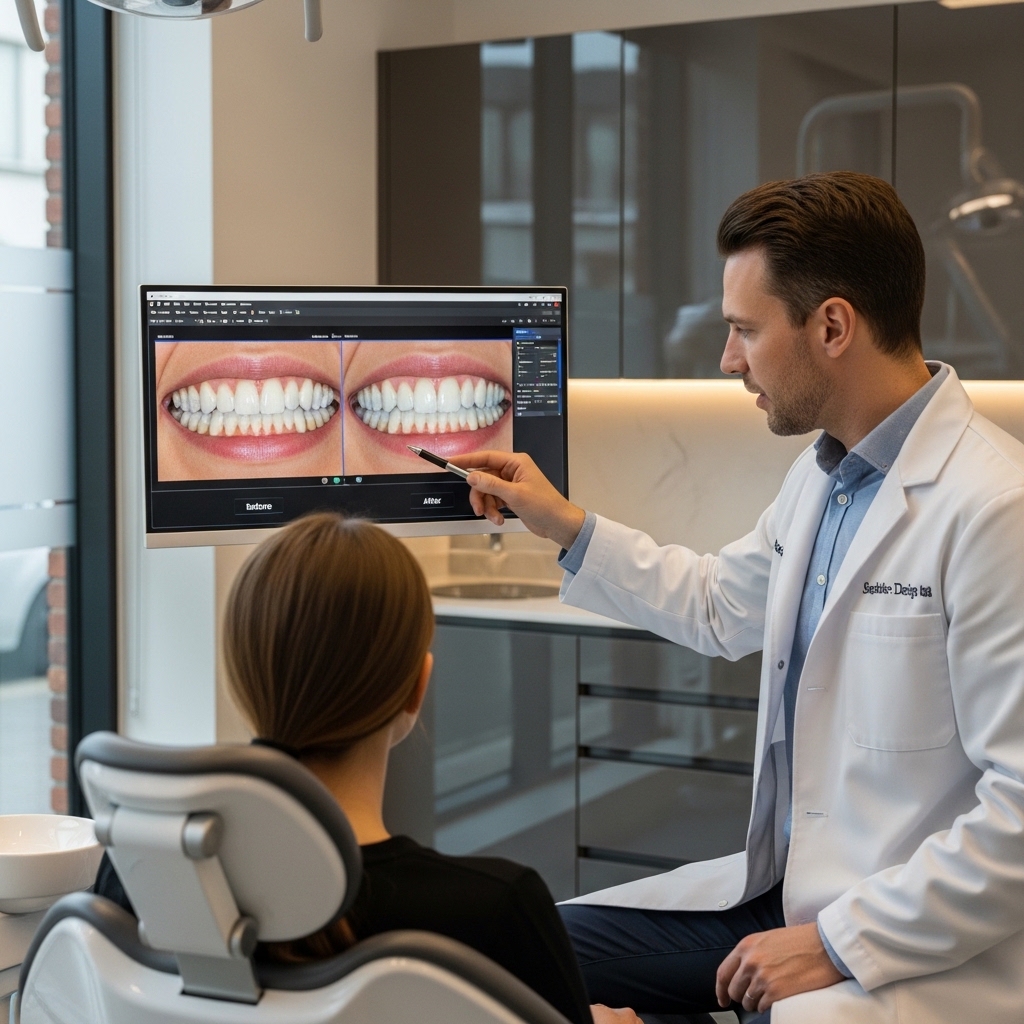
3. Digital Smile Design (DSD) This is where the artistry happens. Using specialized software, the dentist will manipulate your 3D models and facial photographs to design your new smile digitally. They will analyze the Golden Proportion of your teeth, align the dental midline with your facial midline, and carefully plan the exact length and shape of every single restoration. You will be able to view a highly realistic simulation of your proposed new smile on a screen before you ever commit to the treatment.
4. The “Test Drive” (The Motivational Mock-Up) A truly high-end clinic will not ask you to trust a computer screen alone. Based on the digital design, the dental laboratory will create a physical template. During a brief visit, the dentist will use a temporary tooth-colored resin to transfer this new design directly over your existing teeth. You can look in the mirror, take photos, and physically see and feel exactly how your final smile will look on your face. Any adjustments to length or shape are made collaboratively during this visit.
5. The Preparation Phase Once you enthusiastically approve the design, the clinical work begins. If your makeover involves veneers or crowns, the teeth must be gently prepared. Using high-magnification loupes and specialized burrs, the dentist will carefully reshape your teeth, removing only a microscopic layer of enamel (often less than half a millimeter) to create space for the new porcelain. Following preparation, another digital scan is taken and sent to the master ceramist.
6. Placement of Temporary Restorations You will never leave the clinic with compromised or sensitive teeth. The dentist will craft beautiful, highly functional temporary veneers or crowns based on your approved design. You will wear these temporaries for a few weeks while the laboratory hand-crafts your final porcelain restorations. This period allows you to “test drive” the new bite and appearance in your daily life.
7. The Final Delivery and Bonding Once your bespoke porcelain restorations are ready, you will return for the final delivery. The temporary restorations are removed, and the new porcelain is tried in. The dentist will meticulously check the fit, the margins, the color integration, and the bite. Once both you and the dentist are thrilled with the outcome, the restorations are permanently bonded to your teeth using advanced, light-cured resin cements.
8. Follow-up and Final Polish A few days or weeks after the final bonding, you will return for a short review appointment. The dentist will evaluate how your gums are adapting to the new porcelain, make any microscopic adjustments to your bite, and give the restorations a final, high-gloss polish.
Cost Factors in Dubai
Because a smile makeover is a highly customized combination of treatments rather than a single product off a shelf, there is no standardized price tag. When researching a smile makeover in Dubai, it is critical to understand that you are not simply buying a piece of ceramic; you are investing in specialized medical expertise, artistic skill, and highly engineered biomaterials.
Several key factors will heavily influence your overall investment:
- The Scope of Treatment Required: The most obvious factor is the sheer volume of work needed. A makeover involving professional whitening and four composite bonded edges will be significantly more affordable than a complex rehabilitation requiring ten custom E-max veneers, laser gum contouring, and two dental implants.
- The Expertise of the Clinician: You are paying for the hands and the brain of the operator. A highly credentialed cosmetic dentist who has completed thousands of complex rehabilitations, holds international board certifications, and invests continuously in advanced education will naturally command a higher fee than a general practitioner performing their first few veneer cases.
- The Caliber of the Dental Laboratory: This is perhaps the most hidden, yet most critical, cost factor. High-end clinics do not use mass-production, commercial dental laboratories. They partner with master ceramists—highly skilled artisans who spend hours hand-layering different translucencies of porcelain and hand-painting internal stains to perfectly replicate the optical properties of a natural human tooth. The laboratory fee for a master ceramist is significant, and it directly dictates the final beauty and realism of your smile.
- The Quality of Materials Used: Not all porcelain is created equal. Premium materials like E-max (Lithium Disilicate) or highly translucent Zirconia offer superior strength, lifelike light reflection, and excellent biocompatibility with your gum tissue. Clinics utilizing budget materials often produce teeth that look opaque, artificial, and overly bulky.
- Technological Integration: Clinics that utilize 3D CBCT scanners, digital intraoral optical scanners, and specialized Digital Smile Design software have significantly higher overheads. However, this technology drastically increases the safety, precision, predictability, and comfort of your treatment.
When evaluating costs, it is vital to remember that a poorly executed smile makeover will eventually fail, requiring extensive, traumatic, and highly expensive corrective work in the future. Investing in quality, precision, and expertise from the outset is always the most financially sound decision for your long-term health.
Longevity & Maintenance
A common misconception is that once a smile makeover is complete, the teeth are practically indestructible and require no further care. While medical-grade porcelain is incredibly strong and highly resistant to daily staining, your new smile still requires dedicated, intelligent maintenance to protect your investment for decades to come.
Implement a Meticulous Home Hygiene Routine Porcelain veneers do not get cavities, but the natural tooth structure underneath them, and the root structure below the gum line, certainly can. Furthermore, the health of your gums is paramount; if your gums become inflamed and recede due to poor hygiene, the margins of your veneers will become visible and compromised. You must brush twice daily using a soft-bristled toothbrush. Avoid highly abrasive whitening toothpastes (which contain harsh silica that can scratch the high-gloss polish of your porcelain) and instead use a gentle, fluoride-based paste.
Master Flossing and Water Irrigation Flossing is non-negotiable. Plaque aggressively accumulates between the teeth, right at the delicate margin where the porcelain meets your natural tooth. Daily flossing is required to prevent marginal decay and gingivitis. Many cosmetic dentists highly recommend incorporating a water flosser into your routine to gently flush out bacteria from around the margins of veneers and implants without traumatizing the soft tissue.
Protect Against Nighttime Grinding If your dentist diagnosed you with bruxism (teeth grinding) before your makeover, they will almost certainly mandate that you wear a custom-fitted occlusal guard (night guard) while you sleep. The unconscious forces generated by your jaw muscles during sleep are massive and can easily chip or fracture even the strongest ceramic restorations over time. A night guard acts as a protective shock absorber for your new smile.
Commit to Regular Professional Maintenance You must commit to visiting your cosmetic dentist and dental hygienist every four to six months. During these visits, the hygienist will use specialized, non-abrasive polishing pastes designed specifically for porcelain to remove any accumulated plaque or tartar without damaging the surface texture. The dentist will critically evaluate the integrity of the bonding margins, check your bite to ensure forces are evenly distributed, and monitor your overall gum health.
Avoid Using Your Teeth as Tools Your new teeth are engineered for biting and chewing food, nothing else. Using your highly aesthetic porcelain veneers to tear open plastic packaging, bite your fingernails, crunch down on hard ice cubes, or chew on pens will significantly increase the risk of catastrophic micro-fractures or debonding. Treat your new smile with the respect a significant medical and artistic investment deserves.
Medically reviewed by Dr. Mirna, DHA-licensed cosmetic dentist in Dubai.
Frequently Asked Questions (FAQs)
How long does a full smile makeover take in Dubai? The timeline varies wildly depending on the complexity of your specific case. A simple makeover involving laser whitening and minor composite bonding can be completed in a single afternoon. However, a comprehensive transformation involving custom porcelain veneers typically requires two to three weeks from the initial digital design to the final permanent bonding, allowing time for the master ceramist to craft the restorations. If your case requires prerequisite orthodontics (aligners) or dental implants, the timeline can extend from several months to over a year.
Is a smile makeover a painful process? Modern cosmetic dentistry is designed to be a highly comfortable, virtually pain-free experience. High-end clinics utilize strong, fast-acting local anesthetics, and some offer mild sedation options for highly anxious patients. During the preparation phase for veneers, you will be completely numb. You may experience some mild, temporary temperature sensitivity in the days following the preparation or final bonding, but severe pain is incredibly rare and abnormal.
Will a smile makeover ruin my natural teeth? Absolutely not, provided you are working with a highly skilled, ethically driven cosmetic dentist who practices biomimetic principles. Modern veneer preparation is incredibly conservative, often requiring the removal of less than 0.5 millimeters of surface enamel. The goal of top-tier cosmetic dentistry is always the maximum preservation of your healthy, natural biological tooth structure while simultaneously achieving your aesthetic goals.
What is the difference between a “Hollywood smile” and a smile makeover? In modern dental terminology, a “Hollywood smile” often refers to a specific, somewhat dated aesthetic preference: teeth that are completely uniform in shape, highly symmetrical, and rendered in the absolute brightest, most opaque shade of white available (often looking slightly artificial). A “smile makeover,” on the other hand, is a broader medical term that refers to a customized, comprehensive treatment plan designed to create a vibrant, healthy, and exceptionally natural-looking enhancement tailored specifically to your facial features.
Can I see what my new teeth will look like before I commit? Yes. A reputable cosmetic clinic considers this a mandatory step. Utilizing advanced Digital Smile Design (DSD) software and physical motivational mock-ups (the “test drive” phase), your dentist will allow you to see, feel, and evaluate a highly accurate physical representation of your proposed new smile directly in your mouth before any permanent alterations are made to your natural enamel.
Do porcelain veneers stain from coffee or smoking? High-quality, medical-grade porcelain is highly vitrified and virtually non-porous. This means it is highly resistant to the deep, intrinsic staining caused by coffee, tea, red wine, or tobacco smoke. While sticky surface plaque can accumulate and pick up minor colorants, this surface debris is easily polished away during your routine professional hygiene cleanings, restoring the porcelain to its original, brilliant shade.
Am I too old to get a smile makeover? There is absolutely no upper age limit for cosmetic dentistry. In fact, comprehensive smile makeovers are incredibly popular among older adults, as they can effectively reverse decades of natural wear, heavy discoloration, and structural breakdown, profoundly rejuvenating the entire lower third of the face and restoring full chewing functionality. The only strict requirement is a foundation of healthy gums and adequate bone density.
Can I get a smile makeover if I have active gum disease? No. Active periodontal (gum) disease is a serious, progressive bacterial infection that destroys the foundational bone and soft tissue supporting your teeth. Performing expensive cosmetic work on infected gums is clinically negligent and guaranteed to fail. Any reputable dentist will require that your gum disease is aggressively treated, stabilized, and fully healed before initiating any aesthetic procedures.
How do I clean my teeth after getting custom veneers? You should maintain your new veneers exactly as you would natural, healthy teeth. Brush twice daily using a soft-bristled toothbrush and a gentle, non-abrasive fluoride toothpaste. Daily flossing is absolutely critical to remove plaque from the delicate margins where the ceramic meets your natural tooth structure. Many cosmetic dentists also highly recommend using a water flosser for optimal, gentle interdental cleaning.
Will my new smile look fake or too bulky? This is a common and highly valid fear, usually resulting from seeing cheap, poorly executed dental work. When a smile makeover is planned utilizing proper digital facial analysis, and when the restorations are hand-crafted by a master ceramist using highly translucent, premium materials like E-max, the results will look incredibly natural, possessing the exact light-reflecting properties, micro-texture, and delicate translucency of beautiful human enamel.
What happens if a porcelain veneer chips or breaks? While rare with modern, high-strength ceramics and proper bite alignment, accidental trauma (like a fall) or biting down on something excessively hard (like a cherry pit) can fracture a veneer. Unlike composite resin, fractured porcelain generally cannot be seamlessly patched. The damaged veneer will carefully be removed by your dentist, a new digital scan or impression will be taken, and the laboratory will craft a precise replacement to match the surrounding teeth perfectly.
Does dental insurance in Dubai cover a smile makeover? In the vast majority of cases, no. Dental insurance policies in the UAE are structured to cover essential, medically necessary treatments, such as managing active decay (fillings), root canal therapy, or basic extractions. Procedures that are deemed purely elective and cosmetic including porcelain veneers, professional whitening, and cosmetic gum contouring are almost universally excluded from standard insurance coverage. However, some premium clinics offer flexible internal payment plans to assist with the investment.