


Embarrassed by dark underarms? Discover the causes (from shaving to insulin resistance) and the best medical treatments in Dubai, including Laser and Peels, at Releva Clinic.
In the fashion-forward, sun-drenched city of Dubai, sleeveless attire is a staple of daily life. From beach clubs to evening galas, the freedom to wear what you want is often taken for granted—until you feel you have to hide. For many men and women, dark underarms (axillary hyperpigmentation) are a source of significant self-consciousness.
It is a silent struggle. You may find yourself constantly checking your arm position, avoiding certain yoga poses, or refusing to wear tank tops even in the sweltering summer heat. This hesitation stems not from vanity, but from a feeling that your hygiene is being judged, even though dark underarms rarely have anything to do with cleanliness.
The search for effective dark underarms treatment dubai is often filled with misinformation. The internet suggests harsh lemon scrubs or dangerous “bleaching” creams that often burn the delicate skin, leading to even darker pigmentation.
At Releva Clinic, we approach this concern with medical sensitivity and scientific rigor. We understand that restoring the natural tone of your underarms is not just about aesthetics; it is about reclaiming your confidence. This comprehensive, guide explores the root causes of axillary darkening, why medical diagnosis is crucial, and the safe, effective treatments that actually work.
Why Underarms Become Dark: Unmasking the Culprits
The skin of the axilla (underarm) is unique. It is thin, sensitive, rich in sweat glands, and constantly subjected to friction. To treat the darkness, we must first identify why the pigment cells (melanocytes) in this area are overactive.
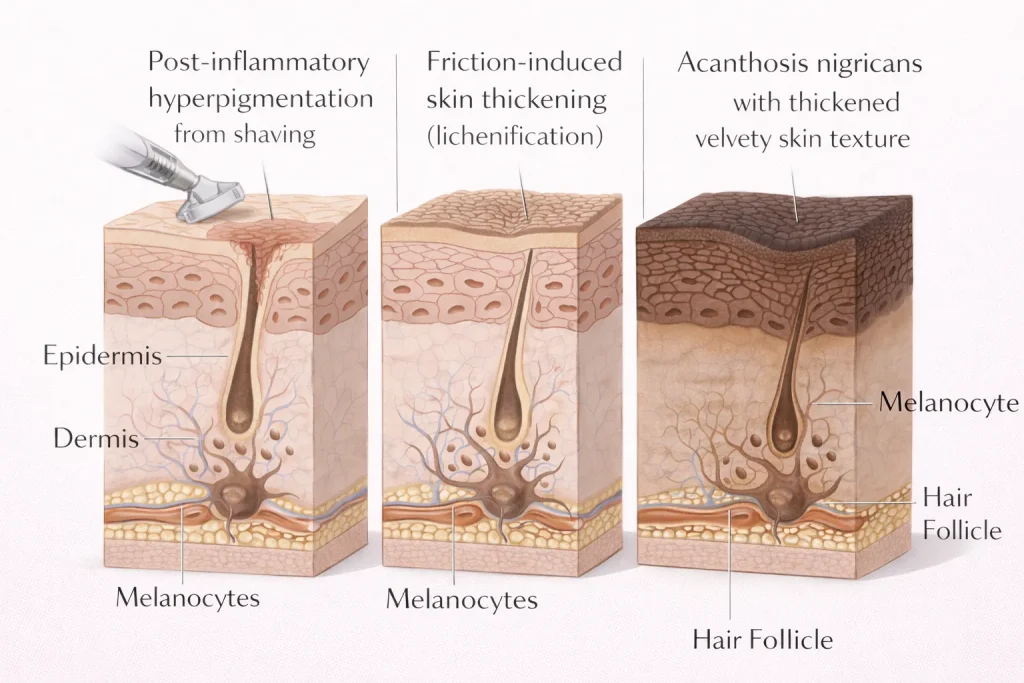
1. The Shaving Cycle (Post-Inflammatory Hyperpigmentation)
For many, the primary cause is their hair removal routine.
- Micro-Trauma: Shaving involves dragging a sharp blade across uneven skin. This creates microscopic cuts and abrasions.
- The Reaction: The skin responds to this injury with inflammation. In darker skin tones (Fitzpatrick IV–VI), inflammation triggers melanocytes to produce protective pigment. This is called Post-Inflammatory Hyperpigmentation (PIH).
- The Shadow Effect: Furthermore, shaving only cuts the hair at the surface. If you have dark hair and fair skin, the root of the hair remains visible beneath the thin skin, creating a “5 o’clock shadow” that looks like pigmentation but is actually hair.
2. Friction and Tight Clothing (Frictional Melanosis)
The underarm is an intertriginous zone (where skin rubs against skin).
- Mechanism: Constant rubbing thickens the epidermis (a process called lichenification). Thick skin blocks light reflection and appears darker.
- Clothing: Wearing tight synthetic fabrics in Dubai’s humidity increases friction and traps sweat, exacerbating the irritation.
3. Chemical Irritants (Contact Dermatitis)
Your deodorant might be the enemy.
- Allergens: Many antiperspirants contain alcohol, synthetic fragrances, and parabens.
- Reaction: These ingredients can cause low-grade Allergic Contact Dermatitis. You might not feel an itch, but the chronic irritation stimulates pigment production over months and years.
4. Hormones and Insulin Resistance (Acanthosis Nigricans)
This is the most critical medical cause.
- The Condition: Acanthosis Nigricans is a skin condition characterized by velvety, dark, thickened skin in body folds (neck, underarms, groin).
- The Cause: It is strongly linked to high insulin levels (Insulin Resistance), Prediabetes, PCOS (Polycystic Ovary Syndrome), and obesity. High insulin stimulates skin cells to reproduce rapidly, leading to the “velvety” texture and darkness.
- Implication: No amount of scrubbing will fix this. It requires lifestyle changes and medical management.
5. Genetics
Some individuals are genetically predisposed to having more active melanocytes in flexural areas. If your parents had dark underarms, you are more likely to develop them.
The Importance of Medical Evaluation
Before booking a “whitening peel,” it is vital to see a doctor. Why?
If your dark underarms are caused by Acanthosis Nigricans, treating them with superficial lasers or peels alone will fail. You must address the underlying metabolic issue (e.g., managing insulin levels or weight).
At Releva Clinic, our approach begins with a consultation. We look for:
- Texture (is it velvety or smooth?)
- Hair density (is it related to hair root shadow?)
- Signs of infection (fungal infections can cause darkness).
- Medical history (PCOS, diabetes).
Only once we have a diagnosis do we build a treatment plan.
Treatment Options: From Lasers to Peels
We utilize a “multi-modal” approach for underarm pigmentation treatment, often combining therapies for faster results.
1. Laser Hair Removal (The Foundation)
If shaving or ingrown hairs are the cause, laser hair removal dubai is the cure.
- How it helps: By destroying the hair follicle, we eliminate the need for shaving. No shaving = no daily friction/trauma = no new inflammation.
- Bonus: It eliminates the “shadow” of the hair root beneath the skin, instantly making the area look brighter.
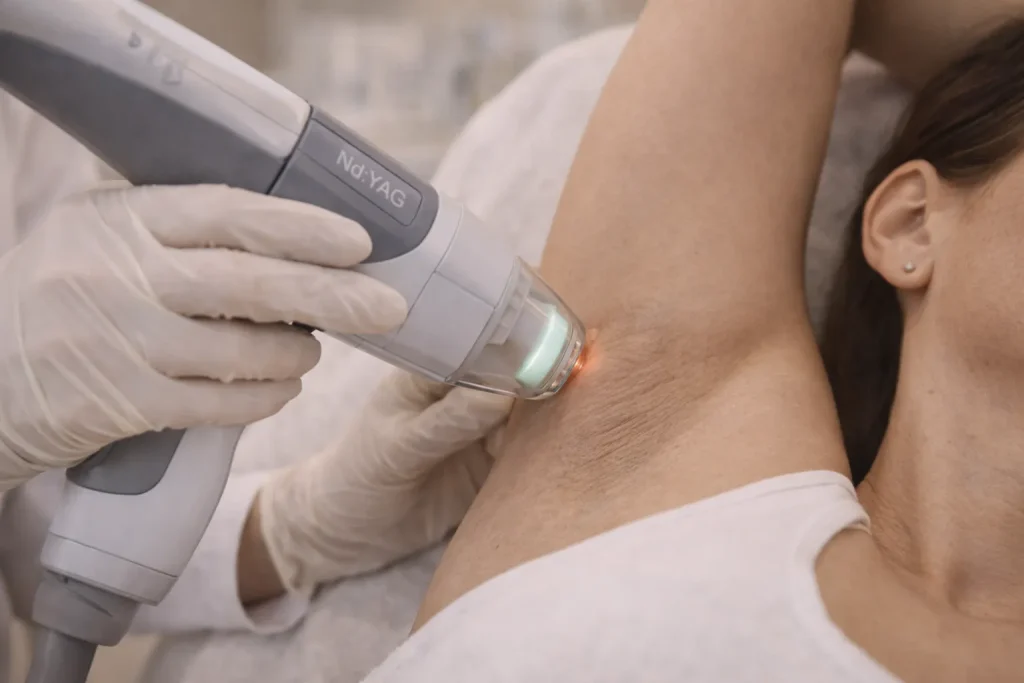
- Device: We use the Nd:YAG laser, which is safe for darker skin types and targets the hair root deep without burning the surface.
2. Q-Switched and Pico Lasers (Pigment Breaking)
For true pigmentation (melanin deposits), we use advanced pigment lasers.
- Mechanism: These lasers emit ultra-short pulses of energy that shatter the pigment clusters in the underarm skin into dust-like particles. The body’s immune system then flushes these particles away.
- Benefit: It treats the pigment without heating the skin excessively, which is crucial in the underarm area where heat can get trapped and cause burns.
- Protocol: Usually requires a series of 4–6 sessions.
3. Chemical Peels (Exfoliation)
Chemical peels are highly effective for removing the darkened, thickened top layer of skin.
- Ingredients: We use specialized body peels containing Lactic Acid (hydrating and brightening), Mandelic Acid (gentle, derived from almonds), or Kojic Acid.
- Mechanism: The peel dissolves the bonds holding dead, pigmented skin cells together. Over the next few days, the dark skin flakes off, revealing fresh, lighter skin underneath.
- Caution: Underarm skin is thin. We never use aggressive facial peels here. The formulations must be pH-balanced for sensitive body areas.
4. RF Microneedling (For Texture)
If the skin is thickened and velvety (mild Acanthosis Nigricans), RF Microneedling can help.
- Mechanism: The needles break down the thickened tissue, while the radiofrequency heat normalizes the skin structure.
- Result: The skin becomes smoother and allows topical brightening creams to penetrate better.
5. Topical Medical Treatments
Home care is 50% of the battle. We may prescribe:
- Triple Combination Creams: (Hydroquinone + Retinoid + Steroid) for short-term use to bleach stubborn pigment.
- Non-Hydroquinone Brighteners: Cysteamine, Tranexamic Acid, or Azelaic Acid for long-term maintenance.
- Urea Creams: To exfoliate thickened skin gently.
Results Timeline: Patience is Key
Underarm skin is slow to heal because it is constantly moving and rubbing. Managing expectations is important.
- Month 1:
- Treatment: Start Laser Hair Removal + Prescribed lightening cream.
- Result: Reduction in hair shadow and irritation. Skin feels smoother.
- Month 2–3:
- Treatment: Chemical Peels or Pico Laser sessions (every 3–4 weeks).
- Result: Visible breaking up of pigment. The edges of the dark area begin to fade.
- Month 4–6:
- Treatment: Maintenance.
- Result: Significant lightening (60–80% improvement). Skin tone matches the surrounding arm area more closely.
Note: “Instant whitening” procedures often use temporary dyes or heavy makeup. Medical lightening is a biological process that takes time.
Safety Considerations: The Risk of Burns
The underarm is a “high-risk” zone for aesthetic treatments.
- Occlusion Effect: Because the arm is usually down, the skin folds over itself. If a strong peeling agent or cream is applied, the folding “traps” the chemical, driving it deeper than intended. This can cause severe chemical burns.
- Friction: Walking or moving immediately after a peel creates friction, which can strip the skin raw.
- Lymph Nodes: The area is rich in lymph nodes. While surface treatments don’t affect them, infections from poor hygiene during microneedling can be serious.
The Releva Safety Protocol:
- We use lower concentrations of acids for underarms than faces.
- We instruct patients to avoid deodorant for 24 hours post-treatment.
- We prescribe anti-inflammatory creams to prevent “Rebound Hyperpigmentation” (where the skin gets darker after irritation).
Why Choose Releva Clinic for Underarm Treatments?
Treating this sensitive area requires more than just a laser; it requires a dermatologist’s insight.
1. Comprehensive Diagnosis We don’t just treat the symptom; we look for the cause. If we suspect insulin resistance, we will guide you toward lifestyle management, ensuring your results last.
2. Specialized Technology We invest in “color-blind” lasers like the Pico and Nd:YAG that are safe for all skin tones. This is critical in Dubai, where many patients have melanin-rich skin that burns easily with older IPL devices.
3. Privacy and Comfort We understand the embarrassment associated with this condition. Our treatment rooms are private, and our staff is trained to handle your concerns with the utmost discretion and professionalism.
4. Holistic Dermatology We combine the aesthetic (lasers) with the medical (prescriptions) to give you the most powerful, safe results possible.
Frequently Asked Questions (FAQ)
1. Can deodorant cause dark underarms? Yes. Fragrances, alcohol, and aluminum in antiperspirants can cause chronic irritation (contact dermatitis). We recommend switching to hypoallergenic, fragrance-free deodorants or natural mineral stones during treatment.
2. Is laser hair removal enough to whiten my underarms? For about 50% of patients, yes. If the darkness is caused by hair root shadow and shaving irritation, laser hair removal alone will resolve the issue. If there is true skin pigmentation, you will need pigment lasers or peels in addition.
3. Does baking soda and lemon work? Avoid this. Baking soda is too alkaline (high pH) and lemon is too acidic (low pH). Mixing them disrupts your skin barrier. Lemon is also phototoxic—if you go in the sun, it can cause severe burns and darker spots.
4. How many sessions of whitening laser do I need? Typically 4 to 6 sessions, spaced 3 to 4 weeks apart.
5. Is the treatment painful?
- Chemical Peels: Mild tingling/itching for 5 minutes.
- Pico Laser: Feels like tiny prickling heat. Very tolerable.
- Laser Hair Removal: Feels like a rubber band snap (we use cooling air to numb it).
6. Can I shave between treatments? Yes, but be gentle. Use a sharp, single-blade razor and shaving gel. Never dry shave. Avoid waxing or plucking as this causes trauma.
7. Why are my underarms itchy after treatment? The healing process can cause mild itching. Do not scratch! Scratching creates friction and leads to darker skin. Use a moisturizer or a mild hydrocortisone cream if prescribed.
8. Can I do this treatment if I am pregnant? We generally avoid lasers and chemical peels during pregnancy. The hormonal surge (melasma) often causes darkening naturally, which may resolve postpartum. Stick to safe topical moisturizers during pregnancy.
9. How much does underarm whitening cost in Dubai? It varies. A chemical peel might cost AED 400–600. Laser toning sessions range from AED 600–1000. Packages are usually available to reduce the cost of a full course.
10. Will the darkness come back? If the cause was shaving and you switch to laser hair removal, it usually won’t come back. If the cause is hormonal (PCOS/Insulin), you must manage your health to prevent recurrence.
Raise Your Arms with Confidence
Dark underarms are a common, treatable medical condition. You do not have to live with the limitation of hiding your skin.
At Releva Clinic, we offer a judgment-free, medical pathway to brighter, smoother underarms. Let us help you feel comfortable in your own skin again.
Ready to start? Book a consultation with our specialists today and take the first step toward lasting confidence.