


Comparing professional teeth whitening in Dubai vs at-home kits? Discover safety, costs, and results to choose the best option. Book a consultation today.
Medically reviewed by Dr. Mirna, DHA Licensed Dentist at Releva Clinic.
Picture this: you are getting ready for an important meeting or a special evening out. You look in the mirror and notice your smile has lost its natural brightness.
Between your morning espresso, afternoon tea, and the vibrant spices common in our daily diets, your teeth endure a daily barrage of stain-causing agents. Over time, that brilliant white smile gradually fades into a duller, yellowish hue.
This scenario is incredibly common, leading many to search for the most effective teeth whitening in Dubai.
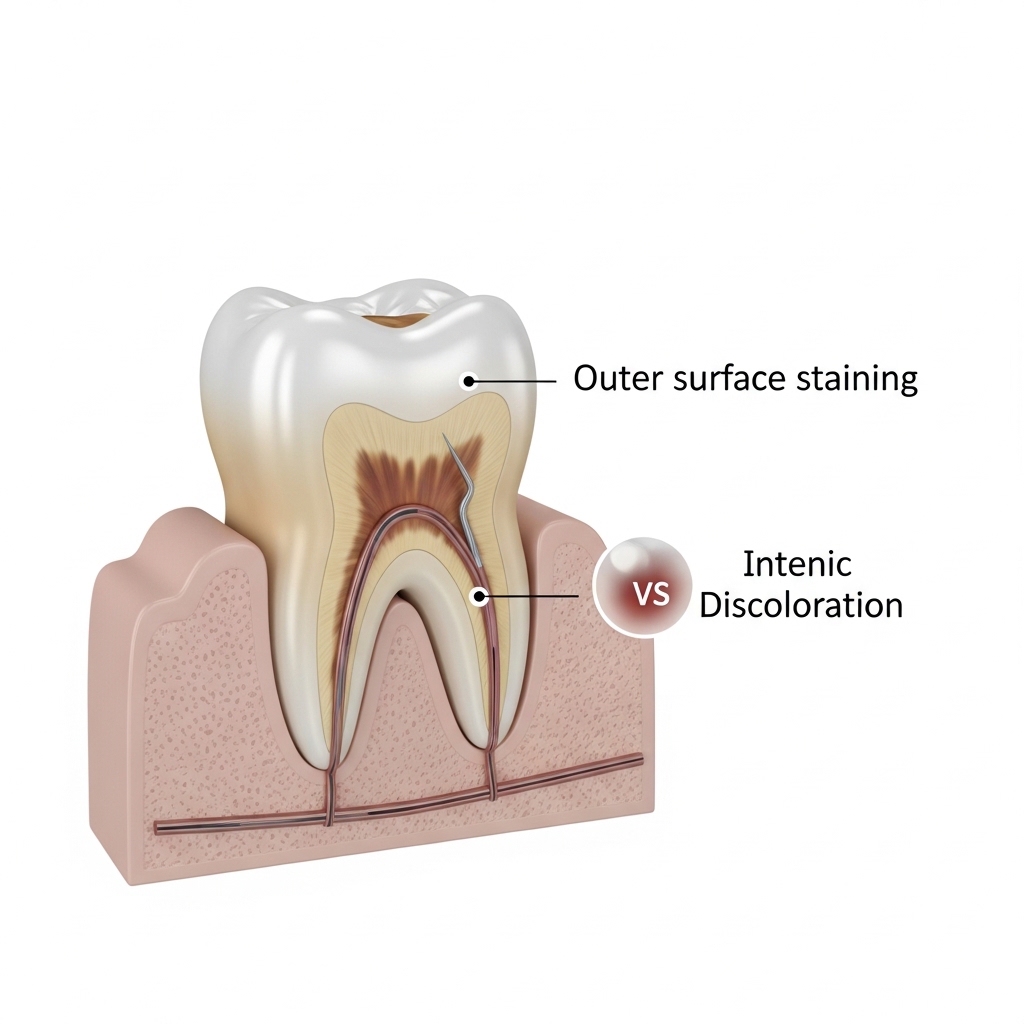
However, before you grab the first whitening kit you see online, it is crucial to understand that not all discoloration is the same. There is a vast difference between “surface stains” caused by yesterday’s coffee and “intrinsic discoloration” that develops deep within the tooth structure.
Treating these effectively requires different approaches, different ingredients, and varying levels of professional oversight.
In this comprehensive guide, we will provide an honest, medically accurate comparison of your whitening options. We will explore the science behind these treatments, weigh the safety profiles of various products, and break down the true costs.
Whether you are leaning toward the convenience of an over-the-counter kit or the guaranteed results of a clinical treatment, this article will give you the clarity you need to make an informed, safe decision for your smile.
Why Teeth Become Discolored
Understanding why your teeth have lost their brightness is the first critical step toward restoring it. Discoloration does not happen overnight; it is usually a cumulative process.
Dental professionals categorize tooth stains into two main types: extrinsic (surface-level) and intrinsic (internal). Let us explore the most common culprits behind both types of discoloration:
- Food & Drinks: Darkly pigmented beverages like coffee, black tea, red wine, and cola contain intense color pigments called chromogens. These attach firmly to the white, outer part of your tooth (the enamel).
- Smoking and Tobacco Use: Tobacco products contain tar, which is naturally dark, and nicotine, which is colorless until it mixes with oxygen. Once oxidized, nicotine turns into a stubborn, yellowish surface-staining substance.
- Age-Related Enamel Thinning: Beneath your white enamel lies a softer area called dentin, which is naturally yellow. As you age, your outer enamel layer naturally wears thinner from brushing and acidic foods, allowing the yellow dentin to show through.
- Medications and Medical Treatments: Certain antihistamines, antipsychotics, and high blood pressure medications can darken teeth. Furthermore, exposure to the antibiotic tetracycline in the womb or early childhood can cause severe, deep-set intrinsic staining.
- Excessive Fluoride (Fluorosis): High levels of fluoride exposure during the years when teeth are forming can cause fluorosis, which often presents as faint white lines or brownish spots on the teeth.
- Genetics: Simply put, some people are born with thicker, whiter enamel than others. Your genetic makeup dictates the natural baseline shade of your teeth and how transparent your enamel is.
What Teeth Whitening Actually Does (and Doesn’t Do)
There is a common misconception that whitening physically scrubs layers of stains off your teeth. In reality, modern whitening is a fascinating chemical process.
True teeth whitening utilizes active ingredients typically hydrogen peroxide or carbamide peroxide—to penetrate the porous surface of your enamel.
Once inside, these bleaching agents release oxygen molecules that react with the discolored molecules in your teeth. This oxidation process breaks the molecular bonds that hold the color, scattering the stain and making the tooth appear significantly brighter.
It is important to differentiate between whitening and cleaning. A professional dental cleaning (scaling and polishing) physically removes hardened plaque (tartar) and surface debris. Whitening, on the other hand, actively alters the baseline color of the tooth structure.
However, whitening is not magic, and it has distinct medical limitations.
What Whitening Cannot Change: Whitening agents only work on natural tooth structure. They will have absolutely no effect on restorative dental work.
If you have existing dental crowns, porcelain veneers, or composite (tooth-colored) fillings, these materials will not lighten. If you whiten your natural teeth, these restorations may suddenly stand out as noticeably darker, requiring replacement to match your new shade.
Quick answer: Teeth whitening uses peroxide-based gels to break down complex stain molecules inside your enamel, revealing a brighter shade. It does not clean away tartar and will not lighten artificial materials like crowns, veneers, or fillings. For best results, a professional cleaning is always recommended before beginning any whitening treatment.
Professional Teeth Whitening / How It Works
When you opt for professional whitening, you are paying for premium-grade materials, advanced technology, and the strict safety oversight of a licensed dentist.
Professional treatments are designed to deliver the fastest, most noticeable results while actively managing potential side effects like sensitivity.
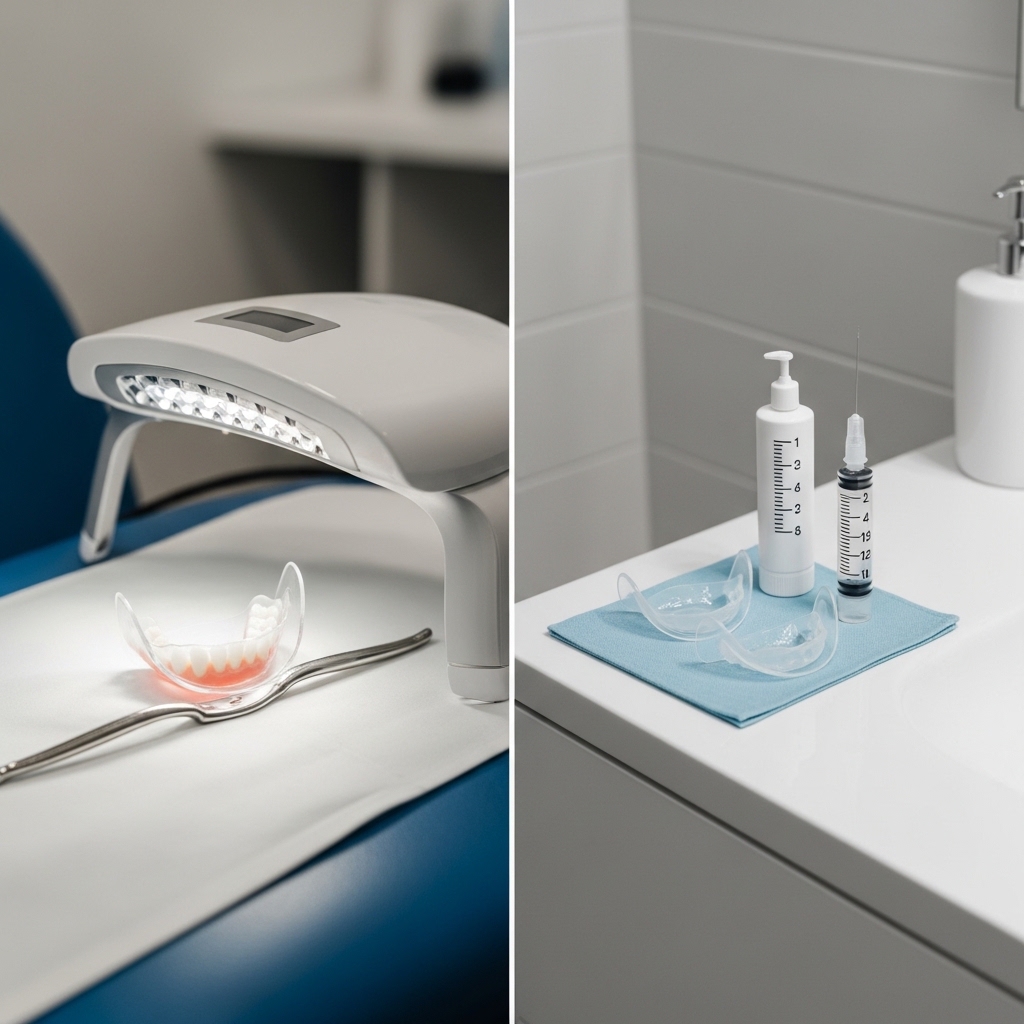
We generally divide professional treatments into two categories: in-clinic procedures and dentist-supervised take-home kits.
In-Clinic Whitening (LED / Professional Gel)
In-office whitening is the gold standard for immediate, dramatic results. This procedure takes place entirely within the dental chair and usually lasts between 60 to 90 minutes.
Because the treatment is monitored by a professional, dentists can use high-concentration bleaching gels that are significantly stronger than anything available over the counter.
Here is what the clinical process typically involves:
- Preparation and Protection: Your dentist will first apply a protective physical barrier—usually a curing resin—along your gum line. This prevents the powerful bleaching gel from causing chemical burns to your soft tissues.
- Application: The high-strength hydrogen peroxide gel is carefully painted onto the surface of your teeth.
- Activation: Many systems use a specialized LED or laser light positioned over your mouth. While the light itself does not whiten teeth, it accelerates the chemical reaction of the peroxide, allowing the gel to break down stains faster.
- Repetition: The gel is usually left on for 15-20 minutes, wiped off, and reapplied up to three times during a single visit.
Dentist-Supervised Take-Home Trays
If you prefer to whiten in the comfort of your home but want professional-grade results, custom take-home trays are an excellent option.
Your dentist will take a precise digital scan or physical impression of your teeth. From this, the dental laboratory fabricates ultra-thin, perfectly fitted plastic trays that hug every contour of your smile.
You are then provided with professional-strength carbamide peroxide gel and detailed instructions.
Because the trays are custom-made, the whitening gel stays exactly where it belongs—on your teeth—and does not leak onto your gums or wash away with your saliva. You will typically wear these trays for a few hours a day or overnight for one to two weeks, achieving clinical results at a more gradual pace.
At-Home Whitening / What Options Exist?
The oral care aisle is flooded with products promising a Hollywood smile. At-home teeth whitening kits offer convenience and a lower initial price point.
However, because these products are unsupervised, regulatory agencies require them to contain much lower concentrations of active whitening ingredients compared to professional gels.
While they can be effective for minor touch-ups or mild surface stains, it is vital to understand the pros, cons, and risks of each method.
Whitening Strips
Whitening strips are flexible, plastic (polyethylene) strips coated with a thin layer of low-concentration hydrogen peroxide.
They are generally the most effective over-the-counter option because the strip holds the gel against the tooth surface, preventing saliva from immediately washing it away.
However, because strips are flat, they often struggle to adhere to the natural curves and crevices between teeth. This can sometimes result in an uneven, patchy whitening effect, especially near the gum line or between slightly crowded teeth.
OTC Gels & Pens
Whitening pens and paint-on gels offer a quick, on-the-go application method. You simply use a small brush to paint a peroxide-based serum directly onto your teeth.
While convenient, their effectiveness is heavily limited by human anatomy. The moment you close your mouth, your lips and saliva rub against the teeth, quickly diluting and washing away the active ingredients before they have adequate time to penetrate the enamel.
LED Gadgets
Many online brands sell kits featuring a mouthpiece attached to a mini LED light.
It is important to approach these with healthy skepticism. While professional dental clinic lights are precisely calibrated to activate specific clinical gels, many over-the-counter LED lights are simply too weak to make a meaningful difference.
Often, any whitening achieved with these kits is due to the accompanying gel, while the light serves mostly as a novelty feature.
Charcoal Products (Myths and Risks)
Activated charcoal toothpastes and powders have surged in popularity, marketed as a natural way to whiten teeth.
As dental professionals, we strongly advise caution here. Charcoal does not contain any bleaching agents; it cannot change the baseline color of your tooth.
Instead, charcoal is highly abrasive. It “whitens” by aggressively scrubbing away surface stains.
Unfortunately, this harsh scrubbing can also permanently wear away your precious enamel. Once enamel is lost, it does not grow back, and ironically, thinner enamel allows the yellow dentin underneath to show through, ultimately making your teeth look more yellow over time.
Results Comparison (Speed, Shade, Longevity)
When comparing professional teeth whitening with at-home methods, setting realistic expectations is crucial for patient satisfaction.
The human eye perceives color differently, and the final result depends heavily on your tooth’s starting shade, its porosity, and the type of stains present.
Here is an honest breakdown of what you can expect regarding speed, shade improvement, and the longevity of your results.
- Typical Shade Improvement Range:
- Professional In-Clinic: Most patients achieve a conservative, natural-looking improvement of 3 to 8 shades brighter on the standard dental shade guide in a single visit.
- Professional Take-Home: Achieves similar clinical results (3 to 8 shades) but requires consistent application over 10 to 14 days.
- At-Home OTC Kits: Typically yield a subtle improvement of 1 to 3 shades, mostly by lifting superficial stains over several weeks.
- Time to See Results:
- In-clinic treatments provide instant gratification; you walk out of the clinic with visibly whiter teeth after just one hour.
- Over-the-counter strips and gels usually require daily use for 2 to 4 weeks before a noticeable difference is achieved.
- Maintenance Habits:
- No whitening is permanent. The longevity of your bright smile depends almost entirely on your lifestyle.
- If you consume heavy amounts of coffee, tea, or use tobacco, your teeth will begin to stain again within a few months, regardless of the method used.
- With good oral hygiene and limited consumption of staining foods, professional whitening results can last anywhere from 1 to 3 years before requiring a touch-up.
Safety & Side Effects (The Truth About Sensitivity)
Safety is the primary reason dental professionals advocate for clinical supervision when altering the chemical structure of your teeth.
While teeth whitening is widely considered safe when performed correctly, it is not entirely without side effects. The two most common complications are tooth sensitivity and gingival (gum) irritation.
Why Sensitivity Happens: Your enamel is porous, containing microscopic channels (dentinal tubules) that lead directly to the nerve center of the tooth.
When peroxide penetrates the enamel to break down stains, it temporarily leaves these pores wide open. This exposes the underlying nerves to temperature changes, leading to sharp, zapping sensations when breathing in cold air or drinking cold liquids.
This sensitivity is usually temporary, subsiding within 48 to 72 hours as the tooth naturally remineralizes through your saliva.
Gum Irritation Risks: Bleaching agents are strong chemicals. If high-concentration peroxide comes into contact with your soft gum tissue, it can cause localized chemical burns, turning the gums temporarily white and causing mild to moderate stinging.
This is highly common with ill-fitting over-the-counter strips or generic boil-and-bite trays that push gel out onto the gums.
Overuse Risks: Chasing an unnaturally white “Hollywood” aesthetic can lead to over-bleaching. Using whitening products too frequently or leaving them on too long can permanently damage the enamel, leaving teeth looking chalky, translucent, or brittle.
When professional whitening is safer:
- You have a history of sensitive teeth and require pre-treatment desensitizing protocols.
- You have an uneven gum line that standard strips cannot safely accommodate.
- You want strong, guaranteed results without risking chemical burns to your soft tissues.
- You need your dentist to apply specialized fluoride or potassium nitrate varnishes immediately after treatment to instantly stop sensitivity.
Who Should Avoid Whitening (or Get a Checkup First)
Not everyone is an ideal candidate for teeth whitening. Attempting to bleach your teeth when underlying dental issues are present can transform a cosmetic procedure into a painful dental emergency.
It is a standard clinical protocol to have a comprehensive dental checkup before initiating any whitening regimen.
Cavities and Gum Disease: This is the most critical contraindication. If you have untreated tooth decay (cavities) or active periodontal (gum) disease, applying peroxide is highly dangerous.
The bleaching gel can bypass the protective enamel and penetrate directly into the inner decay, reaching the nerve and causing excruciating, severe pain.
Pregnancy Considerations: While there is no definitive evidence proving that teeth whitening harms a developing fetus, there is also a lack of robust clinical studies confirming its absolute safety.
Therefore, dental professionals take a conservative approach and generally recommend postponing elective cosmetic treatments, including whitening, until after pregnancy and nursing.
Severe Sensitivity: If you already struggle to drink ice water due to natural tooth sensitivity, aggressive whitening will likely exacerbate the issue. Your dentist may recommend a pre-whitening regimen of prescription potassium nitrate toothpaste for a month before attempting a mild, supervised bleaching.
Very Thin Enamel: If your enamel has worn away due to acid reflux, aggressive brushing, or bruxism (teeth grinding), whitening agents may not be effective. In fact, bleaching highly translucent teeth can sometimes make them look more gray or transparent rather than white. In these cases, restorative options like cosmetic bonding or veneers may be a better path.
Professional vs At-Home — Side-by-Side Comparison Table
To help you visualize the differences and make the best choice for your oral health, we have compiled this straightforward comparison matrix.
| Method | Speed | Typical Results | Safety | Cost Range | Best For |
|---|---|---|---|---|---|
| In-Clinic Professional | Immediate (1 hour) | 3-8 shades lighter | Very High (Monitored) | Premium | Fast, dramatic results for events; heavy staining; sensitive teeth. |
| Professional Take-Home | 1-2 weeks | 3-8 shades lighter | High (Custom fit) | Moderate-Premium | Gradual professional results; maintaining in-clinic results. |
| OTC Whitening Strips | 2-4 weeks | 1-3 shades lighter | Moderate (Gum risks) | Low | Mild surface stains; budget-conscious touch-ups. |
| Charcoal/Abrasives | N/A (Scrubbing only) | Removes surface debris | Low (Enamel damage) | Low | Not recommended for actual whitening; risks permanent damage. |
Teeth Whitening Cost in Dubai (Why Prices Vary)
A common question we receive from patients involves the variation in the teeth whitening cost in Dubai.
If you search online, you will likely find a wide spectrum of prices, ranging from very inexpensive deals at beauty salons to premium pricing at specialized dental clinics.
Understanding what factors into this cost will help you evaluate the true value of the service you are receiving.
- Treatment Type: Naturally, a comprehensive 90-minute in-chair laser whitening session utilizes advanced technology and requires direct clinical time, making it more expensive than a set of custom take-home trays.
- Dentist Supervision vs. Salon Services: It is crucial to remember that dispensing high-concentration peroxide is a medical procedure. Paying for a DHA-licensed dentist ensures that your teeth are evaluated for cavities prior to treatment, and that medical-grade gingival barriers are applied perfectly to prevent burns.
- Clinic Standards: Premium clinics invest heavily in the latest generation of whitening systems (such as Zoom or Philips), which are proven to yield better results with less post-operative sensitivity compared to older, generic systems.
- Case Complexity and Prerequisites: True professional teeth whitening requires a clean canvas. The cost often includes (or requires) a thorough scaling and polishing session prior to the bleaching appointment to ensure the gel can actually reach the enamel rather than sitting on top of tartar.
How to Make Whitening Results Last Longer
Investing in your smile is rewarding, but maintaining that brightness requires a commitment to post-treatment care.
Your teeth are particularly vulnerable to staining immediately after a whitening session because the pores in your enamel remain slightly open for a few days.
Follow these professional guidelines to extend the lifespan of your brightened smile:
- The 48-Hour “White Diet”: For the first two days post-treatment, avoid anything that would stain a white shirt. Stick to chicken, rice, pasta, potatoes, and clear liquids. Strictly avoid coffee, tea, berries, soy sauce, and red wine.
- Strategic Drinking: When you do resume drinking dark beverages, use a reusable straw. Positioning the straw past your front teeth significantly reduces the amount of dark liquid washing over your visible smile.
- Toothpaste Choices: Alternate between a gentle, non-abrasive whitening toothpaste (to lift daily surface stains) and a sensitivity toothpaste containing potassium nitrate to soothe the nerves.
- Rinse Immediately: If you cannot brush after a staining meal or a cup of coffee, vigorously rinse your mouth with plain water to flush away the chromogens before they can settle into the enamel.
- Routine Hygiene Cleanings: Visit your dental hygienist every six months. Professional polishing removes the microscopic sticky plaque that attracts and holds onto new stains.
- Touch-Up Schedule: If you have custom take-home trays, ask your dentist for a refill syringe of gel. Wearing your trays for just one night every 4 to 6 months is an excellent way to maintain your clinical results year-round.
Why Choose Professional Teeth Whitening at Releva Clinic
Your smile is one of your most valuable assets, and altering it should always be done with precision, care, and medical expertise.
When seeking the best options for teeth whitening in Dubai, clinical safety should be your highest priority. At Releva Clinic, we do not believe in a one-size-fits-all approach to cosmetic dentistry.
Our DHA licensed practitioners take the time to evaluate the specific thickness of your enamel, map out the nature of your discoloration, and create a personalized shade goal that looks naturally vibrant, not artificially glaring.
We utilize premium, globally recognized whitening systems equipped with advanced desensitizing agents. This ensures that your journey to a brighter smile is as comfortable as it is effective.
Whether you are looking to prepare for a major life event or simply want to refresh your daily confidence, we invite you to explore our dental clinic in Dubai.
During your consultation, we will assess your suitability for whitening and discuss if this treatment aligns perfectly with our broader cosmetic dentistry services.
Frequently Asked Questions
1. Is professional teeth whitening safe? Yes, professional teeth whitening is highly safe when supervised by a licensed dentist. Dental professionals use customized barriers to protect your gums and carefully monitor the peroxide concentration to prevent any damage to your enamel or soft tissues.
2. How long does teeth whitening last? The longevity of your results depends heavily on your diet and lifestyle, typically lasting between one to three years. Patients who frequently consume coffee, tea, or use tobacco will notice their teeth staining much faster, requiring more frequent touch-ups to maintain the shade.
3. Does whitening damage enamel? No, modern professional whitening does not permanently damage or strip away tooth enamel when used correctly. The bleaching agents temporarily open the pores of the enamel to break down stains, but the tooth naturally remineralizes and hardens again within a few days through your saliva.
4. Why do my teeth feel sensitive after whitening? Sensitivity occurs because the whitening process temporarily opens microscopic channels in your teeth, exposing the underlying nerve to temperature changes. This is a normal, temporary response that usually subsides within 48 to 72 hours and can be managed with specialized toothpaste.
5. How many shades whiter can I get? Most patients can expect their teeth to lighten by 3 to 8 shades on a professional dental shade guide. The final result depends on your starting baseline, the natural translucency of your teeth, and how well your specific enamel responds to the oxidation process.
6. What’s the safest at-home whitening method? The safest at-home method is using custom-fitted trays fabricated by your dentist, paired with professional-grade gel. This ensures the bleaching agent remains strictly on the tooth surface, preventing the chemical burns to the gums frequently caused by ill-fitting over-the-counter kits.
7. How much does teeth whitening cost in Dubai? The teeth whitening cost in Dubai varies widely based on the method chosen and the clinic’s standards. In-clinic laser treatments are typically a premium investment due to the technology and direct clinical supervision, while custom take-home trays offer a more moderate price point.
8. Can I whiten crowns or veneers? No, whitening agents only work on natural, porous tooth structures. They will not change the color of porcelain crowns, veneers, or composite fillings. If you whiten your natural teeth, existing restorations may need to be replaced later to match your new, brighter smile.
9. How often can I whiten my teeth? For in-clinic treatments, once a year is generally sufficient, though minor touch-ups with take-home trays can be done every 4 to 6 months. Over-whitening can lead to chronic sensitivity and make your teeth appear chalky, so always follow your dentist’s recommended schedule.
10. Is teeth whitening painful? The procedure itself should not be painful, though some patients experience mild to moderate “zings” of sensitivity during or immediately after the treatment. Dentists mitigate this by applying desensitizing gels and using advanced systems designed to be gentle on the dental nerve.
11. Does whitening work on yellow teeth? Yes, teeth with a yellowish hue generally respond best to whitening treatments, as these are typically caused by extrinsic lifestyle stains. Teeth with a grayish or brownish tint, often caused by internal factors like medications, are much more difficult to bleach and may require alternative cosmetic solutions.
12. What should I avoid after whitening? For the first 48 hours, you must avoid any foods or drinks that would stain a white shirt, as your enamel is highly susceptible to absorbing new colors. This means strictly avoiding coffee, tea, red wine, dark berries, soy sauce, and all forms of tobacco.
Ready to achieve the bright, confident smile you deserve? Schedule a consultation with our licensed experts today to discuss your shade goals and find the perfect whitening solution tailored to your unique dental profile.